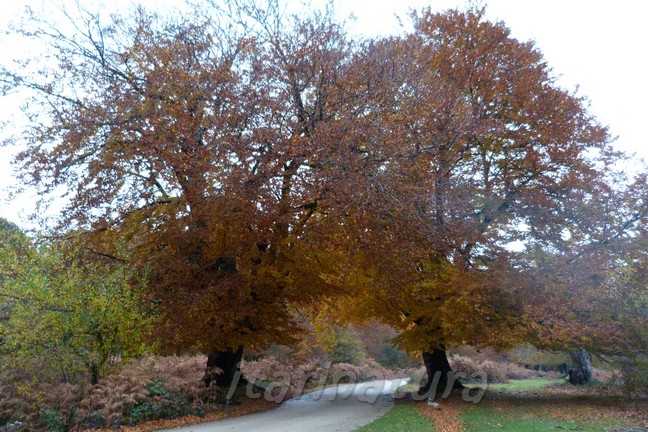
Wednesday, March 27, 2013

Easter holidays¿What to see in the forest of Irati?


With the arrival of the Easter holidays, many people will choose to come visit Irati forest. To make the trip as enjoyable as possible, we must bear in mind a few things;
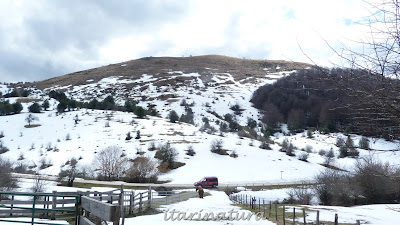
Mount Azalegi(Aezkoa,Navarre)


  1. There is still snow on the mountains. This may be an incentive, or a disadvantage depending on how prepared we go. Thus, hiking boots, if you walk out of the tracks, or even to walk on some of them, are highly recommended.
  2. Of the two entries on Navarre to Irati  (Aezkoa and Salazar) at the moment only Aezkoa valley is open, (from Orbaizeta) because by Otsagabia / Ochagavia (Salazar Valley) there is still too much snow and not pass snowplows. This may change, so the  best is to ask in the information Office of Otsagabia: oit.ochagavia @ cfnavarra.es In any case, the village of  Otsagabia and Salazar/ Zaraitzu valley in general well worth a visit.                                                                                                  The time point Arrazola information is from 9:00 to 19:00 from Saturday 23 March until 1 April inclusive.
  3. As the weather forecast indicates that something will upset your best if you go with warm clothes, spare clothes, and I will also recommend the umbrella than a raincoat only. Around here at least, you will not see a shepherd in the rain with a raincoat. They use the umbrella, because  it's what you'll driest maintain.

Megalithic area of Azpegi(Aezkoa,Navarre) with Mendilatz nature reserve in the background
     4.Bad weather can be an opportunity to visit the villages of these Pyrenean valleys, nooks filled with a lot of mystery, magic and history. Within half an hour we pass from one valley to another, around landscapes that will be in the memory for a long time.

    Narcissus asturiensis
5. Dont take  flowers  that are beginning to emerge. Although some sites will look very abundant, it may just be in that small area, and outside to be very slim. You can remember best by a good photo. Moreover, in this way, the coming years this plant will be reproduced and  will be still mor

            6. The wildlife starts to move. About three weeks ago I took this photo of a wild cat (Felis silvestris) while waiting in the middle of a meadow vole or to a field mouse move to remove some of the hunger winter. It was not in Irati but on the way to  there . In general, wildlife in Navarra is varied and rich.
Wild cat(Felis silvestris)

    Smooth snake  (Coronella  Austriaca)
7. For the same reason, this snake, an Smooth snake, harmless to us started out of his slumber to catch any mice or small insects and encouraged by the first warm rays of sunshine began to poke his head out of their shelters winter

 8.Finally, I invite you to do a tour with us, where we will explain  you everything we  will see in our way. You can also visiting our web: www.itarinatura.com  or put you directly in contact with us, either at the point of information Arrazola (Irati Aezkoa valley,Navarre) or with our email : itarinatura@itarinatura.com

Thursday, February 14, 2013

Snow in the forest of Irati (Navarre)


With more than 1.50 meters of snow, snowdrifts without, in the mountains of the forest of Irati, landscape and life of the people of the valley changes significantly.It's still snowing, and so many days in a row to start giving problems mainly to deers and roe deers, and in diferent extent,to the rest of the animals in these forests. In Abaurregaina (Aezkoa), the highest village in Navarra and co-owner of Mount Aezkoa, part of the forest of Irati ,  the snow on the roof of a house reaches 1.20 m. Snow.Animals develop different strategies to cope with the winter, which is often a problem for cold & the absence of food.When they have nothing to eat because everything is under the snow, they have some strategies;or digging in search of plants, roots, stems, etc. .., or eat other things that normally would not eat as bark or lichens, or eat what escapes out the snow , as the fruits of certain species that survive the winter, as the fruits of holly (Ilex aquifolium) or the wild rose (Rosa canina) named in Navarre "tapaculos" (Cover asses) among other names, apparently due to its astringent properties.


There are also those who have kept their supplies, as the red squirrel, the vole or Jay, or who decide to move and go to other areas where access to food is easier. If they are birds, we are able to see at a lower altitude species generally would see further north, such as alpine accentores seen recently in Orbara (Aezkoa). But if roe deer and wild boar, among others, damage the winter garden, composed of leeks, cabbages and thistles, and damage to the fruit trees, that they bark must be as sweet to them, are substantial, and between owners see the need to control through hunting.Probably the quota of roe deer  and roes that every year the environmental department  of Navarre assigned to hunters this year will decrease.Many will die because of these heavy snowfalls.


      In the west prairies zones of Irati , have large areas of natural grassland, also in the range of Abodi, belonging to Aezkoa and Salazar valleys. You do not see fences or hedges, and it all evens like we were in the Arctic. Make a journey on snowshoes or cross-country skis becomes an exciting adventure, and even knowing the terrain, the snow gives a completely new.Beware miss!


You will see different tracks in the snow, tracks left by wild animals on their movements looking for food. Sometimes you can identify some of them as long as not too melted and disfigured, or the snow cover and disappears. This in particular is red fox (Vulpes vulpes), which stands in the snow tremendously.It is very similar to the dog, but the pad marks the front toes are not touching the rear of an imaginary line drawn on top of the rear pads.


Footprint Boar (Sus scrofa)


This corresponds to a boar (Sus scrofa). Hoof is unmistakable with its two small holes on the back side for their hooves, which the deer or deer do not usually leave.


Traces of red squirrel (Sciurus vulgaris)


The common squirrel (Sciurus vulgaris) also leaves footprints in the snow more or less easy to recognize, especially when supports front and rear legs, but this is not the case. They are long, slender fingers, and nails. You always find very near the trees, and possibly start and end at one.I could not ask him what the hell was in the snow ..
 
Footprint of badger (Meles meles)
Badgers (Meles meles)makes typically footprints similar to those of the bears, but small, especially the earlier mark. With its 5 fingers and 5 nails is one of the easiest to recognize. In this picture you can see that was quiet, otherwise the position of the tracks vary, the footprint would gather more between them by twos and one in front and one in back.


Like everything else, the snow also has a positive side, and especially for children  is clear. This year it has snowed a lot we have had the opportunity to raise an igluman to the front door.With this name you can  imagin what is it. The snow, compacted in this way, hold more than around him, and when already melted around the igluman hold on a little longer, until it falls and it's time to regain the "txapela" or beret. Carrots also can thus remains chilly. The building you see in the background is a granary or Garea (Gare in Basque means wheat) where the grain was stored away from rodents. These granarys of the valle ofAezkoa are the easternmost of the Iberian peninsula, and also an excuse to visit our villages. All of them have one or more.If someday're here, let me know and I'll show you inside. Which unless this detail to my readers!

Sources: Tracks and signs of animals in Europe Preben Bang & Preben Dahlstrom (Ediciones Omega) 

Wednesday, January 16, 2013

Things to see in the winter of the Irati forest


This winter we are having unusually high temperatures for this time of year, and we have enjoyed precious days for walks through the forests.But some might think that going to the forest in winter, when the trees have no leaves, not worth it, but nevertheless, there is always many things to see, if you are ready.This photo is taken from the hill of Soraluze, near the western boundary of the forest of Irati, and important area with abundant megalithic dolmens and cromlech. Here goes the GR-12, or Euskalherria path.Nearby is Mount Urkulu, with the ruins of the ancient Roman tower keeping Astorga_Burdeaux Roman road, which passes close from here. In the background, you can see Mount Ori, eastern boundary of the forest of Irati, 2017 meters high, in the neighboring valley of Salazar


Dolmen of Soraluze (Aezkoa Valley,Navarre)


In this photo we have several starlings (Sturnus vulgaris). The black starlings (Sturnus unicolor) are such that sometimes we often forming large flocks at dusk when seeking roosts. These have come here to spend the winter, from  northern lands. Black starlings there are not commons in Irati  forest , but every year they are increasing their limits more to the north and more of them.
There are several good links on these birds.This bird web is from Argentina, where it is an invasive species and  they have many problems with it:
http://www.fotosaves.com.ar/Passeriformes/Sturnidae/FotosSturnidae.html


Very near  from Soraluze we can see the remains of this dried beech that seem to have gunned.Big chips line the grass at 180 º from where they have been detached by a type of woodpecker. If you look closely, you will see a very round hole in the top right of  the trunk, in the shadows.Is an old nest of a type of woodpecker.All this disaster had a purpose, that of finding succulent larvae that feed on dead wood, and the birds take to force the rotten wood chipping.


Here we are just 50 meters from the first, another dead tree with two old nests of woodpeckers,one forward and one to the right.
In an area of ​​grass near the edge of the forest, we found this  Badger´s(Meles meles) latrine. These animals deposit their droppings always in the same place. In this  one,we can see that has been used in at least three times, and in the first, fed on fruits with small seeds, probably wild rose, whose orange fruits remain  in the branches during part of the winter, and we can eat after removing the irritating hairs containing inside. They have lots of vitamin C.


In the trunk of a beech, we find this rare saprophyte fungus, (that feeds on dead matter) whose species, honestly it was the first time I watched. Probably is somewhat deteriorated. I put an euro coin on top of it so it can distinguish the size.If anyone knows what species can be treated, I would greatly appreciate the information.


In the reservoir water of Irabia (Aezkoa,Navarre)we found this  Great Cormorant (Phalacrocorax carbo) perched a top a pole. We can see them throughout the year, but also have some of them during  the winter of the north . They measure about 1 meter in length and  a wingspan of 1.50 m. approx. They eat fish, and their presence, which increases without know very well the reasons (there was not a few decades ago in these valleys, but it seems that they lived here in the past) is for many people one of the causes of the decline of the trout population of Navarre Pyrenean rivers.

 To learn more about their food:
www.ardeola.org/files/330.pdf

Great Cormorant( Phalacrocorax carbo)

When we were leaving, we found two deer (Cervus elaphus) that ran for cover, but occasionally stopped to see what we were doing. That's when twe took photos, Before they came together in flight


In short, nature has a lot to offer us, wherever we go, wherever we are.


Wednesday, December 26, 2012

Old trees of Irati forest. The fiel maple of orion(MN 19)

In the forest of Irati, several trees are classified as monumental, and as such, they are in the catalog of heritage trees of Navarre.

  I want to offer you some pictures of them taken now in winter , so you can see how magnificent specimens evolve throughout the year.

In this image we hve the field maple of Orion. It lies in the valley of Aezkoa( Navarre), in the way to the reservoir water of Irabia,  a little bit before reaching the hill of Ibiaga left amid meadows area.

You can leave your car in the parking of Ibiaga high :Hence, walk about 500 meters.

There is no marked way that carry you, but from the concrete way  you  will see soon.

Close by, are the hazels of Orion, also declared heritage trees.


The following information I have gotten from this direction of the Government of Navarre:
www.navarra.es/NR/rdonlyres/C879A63C.../MN19ArcedeOrion.pdf

 
Field maple of Orion(Acer campestris)
(MN 19)


Dimensions:

Crown projection: 15.60 x 14.90
  Diameter at base: 1.32
Diameter at height 1'30: 1'07m
Total height: 20 m.

Large and vigorous old maple that is in good condition.
about 15 or 20 years ago was struck by lightning, after which they were removed
dead branches and the crown was restored.

At the base of the trunk cracks seen at a height of 1.5 meters
you can see a branch cut. In a pruned branch sprout with
force some suckers (branches of rapid growth and vertical).

Around trunk protruding roots in a 2 meter
diameter.

The specimen was declared Natural Monument in 1991.

Sunday, November 25, 2012

The strange case of the mysterious substance

In early November walking near the nature reserve of Mendilatz in the Irati forest(Aezkoa Valley, Navarre) I found this substance in the meadows surrounding the reserve. Overall I found two of them.

They had no smell, had some consistency, and were slightly sticky to the touch. They weren´t  bonded to the ground by any appendage.

I sent the photo to various experts  in nature of the area, but although there were different theories, none of them seemed to fit with what could be.

Some of them talk about an artificial substance, but in that place did not seem very plausible. Also did not have any odor that could remind some chemical.

Other said it could be some kind of excrement, having ingested some gelatinous substance, like frog eggs (not yet exist) or even mistletoe fruits, but it was too dense to be something of that nature.

Another assumption was that of a kind of gelatinous fungus uncommon. It is true that there are very similar to the photography, (Myxarium nucleatum or Exidia thuretiana)

You can see something similar in these links:

www.fungipedia.es/.../32325-myxarium-nucleatum
www.asociacionvallisoletanademicologia.com/
The following link is interesting, because once one like it was related to the fall of a meteorite!
www.aforteanosla.com.ar/afla/.../amherst.htm

But do not think that is exactly none of these species, although probably will be a fungus. Nor growing on dead matter of some branch or organic waste.
If someone could give me your opinion would be very grateful, in order to be able to know more about the surprising nature that surrounds us.
You can leave a comment on the blog or write to:
Itarinatura@itarinatura.com

1 december 2012

Few days ago, Javier, from the Ultzama mycologic park, told me maybe could be a fungus of tremellaceae family , but he coudn´t be sure with a photo.

Sunday, November 11, 2012

Irati last colors and .. not buy helium balloons!

It is difficult to determine which is the time when the forest is more beautiful, but we can certainly say that now is precious. This year's leaf fall has been delayed more than last year (you can look at the blog at this time one year ago), but from here on out, sooner or later, the leaves will fall.In fact, they have already start  to do, and there are very big thicknesses in many places.

In this picture we can see the middle zone of the forest of Irati.Greens are losing every day, and give way to the yellow first, and then red and gold, which are most prevalent now.Why there is this color change?
Green indicate the presence of chlorophyll , where the plant is fed with normal light conditions.When it is decreasing, the green chlorophyll is replaced by the  yellow xanthophylls, which are activated with a shorter wavelength, and that can continue making photosynthesis more time, before being replaced by the carotenes, which are what give red in nature.When the amount of light continues to decline, even carotenes serve them to make photosynthesis, and finally they fall.If you want to know more Try these links:

www.botgard.ucla.edu/.../xanthophyll...

http://en.wikipedia.org/wiki/Xanthophyll


Arrazola( Irati forest,Aezkoa)10 october2012


There are other factors such as protection against the cold, so in warmer areas are larger leaves to evaporate more water while in the colder, the leaves surface are reduced like simple needles, as in the Siberian taiga.


Now I will tell you the reason for my request about the balloons with helium.


This balloon hanging from a branch, in the middle of Mendilatz Nature Reserve, in the valley of Aezkoa, tells of a child who lost his balloon into the past holiday from somewhere distant. Air currents drag them tens, hundreds, or even thousands of miles to settle in places where the happiness of the party becomes human waste that causes problems.

We can see the silver ballon hanging from a branch.
We can find them in the lake of Pitillas(Navarre), in the gorges of the pyrenees, and anywhere else you can think like precious.5 years ago appeared in the branches of a beech  of Irati a Mexican probe balloon with a small capsule of polystyrene where there was a small gadget with an explanation for who met him, saying it was not dangerous. He crossed the ocean through the jet stream in the stratosphere to Irati!